VerbEdit AI Writing Tool Logo verbedit.com
An interactive blind test comparing the AI paraphrasing outputs of Grammarly, QuillBot, and VerbEdit.

The Ultimate AI Humanizer Showdown

Grammarly vs. QuillBot vs. VerbEdit: Tested on AI Detectors [2025 Results]

Published on

Tired of your AI-generated text getting flagged? Worried your writing sounds robotic? In the world of AI writing assistants, the ultimate test is no longer just about grammar or clarity; it's about authenticity. The critical question for students, marketers, and creators is: which AI paraphrasing tool can produce genuinely human-like writing that reliably bypasses AI detection?

Forget the marketing hype. This is a direct, data-driven showdown between three of the biggest names in the game. We've fed identical text passages into Grammarly's rewriter, QuillBot's paraphraser, and our own AI humanizer, VerbEdit, to see what comes out the other side.

For each round, you're in the driver's seat. Read the anonymous outputs, vote for the one that sounds the most natural, and then we'll pull back the curtain. You'll see which AI wrote each version and, crucially, their exact scores on leading AI content detectors. Let the battle for undetectable AI writing begin!

The Rules of Engagement: A Fair & Transparent Test

To ensure this is a true head-to-head comparison, we locked in standardized settings. For QuillBot and VerbEdit, the Standard mode was used. Grammarly's default rewriting function was employed, as it lacks distinct modes. Critically, each sentence was processed only one time. There was no "rerolling" for better results, no cherry-picking, and absolutely zero manual editing of the outputs. What you see is exactly what each tool produced on its very first try.
However, when Grammarly and QuillBot hit their 125-word limit, the text was broken into two chunks, paraphrased and put together. No such limitations were imposed on the text being processed by VerbEdit.

Round 1: Paraphrasing Simple Text Without Sounding Robotic

Original Text:

Thanks to rapid progress in artificial intelligence, we have entered an era when technology and philosophy intersect in interesting ways. Sitting squarely at the centre of this intersection are large language models (LLMs). The more adept LLMs become at mimicking human language, the more vulnerable we become to anthropomorphism, to seeing the systems in which they are embedded as more human-like than they really are. This trend is amplified by the natural tendency to use philosophically loaded terms, such as ‘knows’, ‘believes’, and ‘thinks’, when describing these systems. To mitigate this trend, this paper advocates the practice of repeatedly stepping back to remind ourselves of how LLMs … actually work.

Your Turn: Which Rewritten Text Sounds Genuinely Human?

AI-Rewritten Versions:

1

Artificial intelligence is developing at a rapid pace, ushering in a new era when philosophy and technology interact in intriguing ways. Large language models (LLMs) are positioned right in the middle of this juncture. We are more susceptible to anthropomorphism—perceiving the systems in which LLMs are embedded as more human than they actually are—the more proficient LLMs get at mimicking human language. The innate propensity to describe these systems using philosophically charged terminology like "knows," "believes," and "thinks" exacerbates this trend. This report promotes the practice of sometimes taking a step back to remind ourselves of how LLMs … actually work in order to counteract this inclination.

2

Due to the swift advancements in artificial intelligence, we find ourselves in a time where technology and philosophy converge in intriguing ways. At the heart of this convergence are large language models (LLMs). As LLMs grow increasingly proficient at imitating human language, we become more susceptible to anthropomorphism, perceiving these systems as more human-like than they truly are. This tendency is exacerbated by our innate inclination to use terms that carry philosophical weight, such as 'knows,' 'believes,' and 'thinks,' when describing these technologies. To counteract this tendency, this paper encourages the practice of periodically stepping back to remind ourselves of the actual functioning of LLMs.

3

Thanks to rapid advances in artificial intelligence, we have entered a period where technology and philosophy intersect in intriguing ways. At the heart of this intersection are large language models (LLMs). As LLMs become better at mimicking human language, we become more susceptible to anthropomorphism, perceiving the systems they are part of as more human-like than they really are. This tendency is reinforced by the natural use of philosophically loaded terms such as “knows,” “believes,” and “thinks” when describing these systems. To counteract this, the paper argues for a repeated practice of stepping back to remind ourselves how LLMs actually function.

Round 1 Analysis: The AI "Fingerprint" on Simple Text

In our first round, every tool successfully rephrased the text while preserving its core message. The real story, however, is in the AI detection scores. Grammarly's output was flagged as 100% AI by one detector, while QuillBot and VerbEdit scored much more human. This reveals that even with basic text, an AI's rewriting style—its "fingerprint"—can be glaringly obvious or subtly human-like. The more an AI changes sentence structure and word choice unpredictably, the better it seems to evade detection.

Round 2: Tackling Abstract & Nuanced Concepts

Original Text:

As machine learning informs increasingly consequential decisions, different metrics have been proposed for measuring algorithmic bias or unfairness. Two popular fairness measures are calibration and equality of false positive rate. Each measure seems intuitively important, but notably, it is usually impossible to satisfy both measures. For this reason, a large literature in machine learning speaks of a fairness tradeoff between these two measures. This framing assumes that both measures are, in fact, capturing something important. To date, philosophers have not examined this crucial assumption, and examined to what extent each measure actually tracks a normatively important property. This makes this inevitable statistical conflict, between calibration and false positive rate equality, an important topic for ethics. In this paper, I give an ethical framework for thinking about these measures and argue that, contrary to initial appearances, false positive rate equality does not track anything about fairness, and thus sets an incoherent standard for evaluating the fairness of algorithms.

Cast Your Vote: Which AI Best Preserves Complex Meaning?

AI-Rewritten Versions:

1

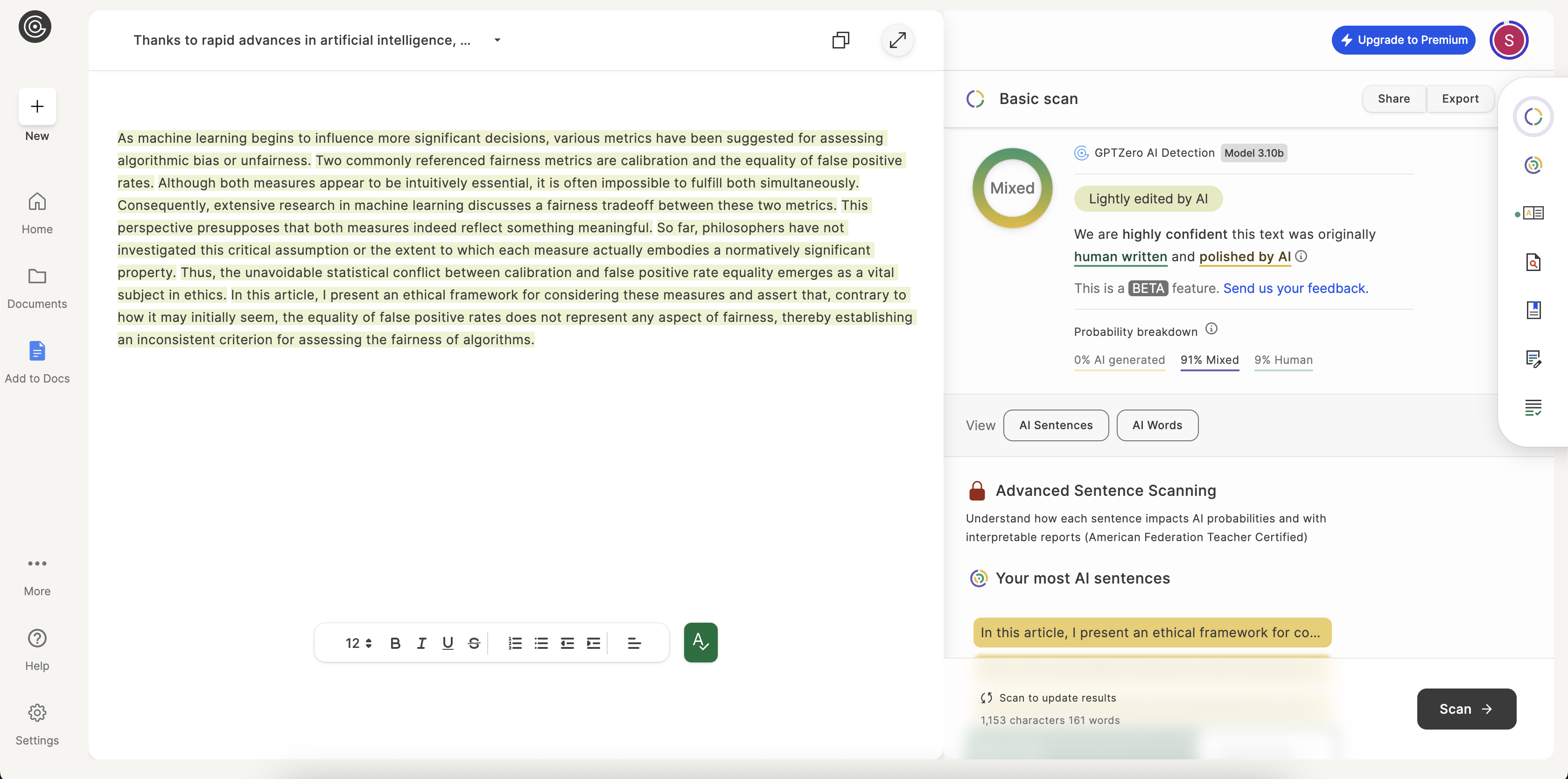
As machine learning begins to influence more significant decisions, various metrics have been suggested for assessing algorithmic bias or unfairness. Two commonly referenced fairness metrics are calibration and the equality of false positive rates. Although both measures appear to be intuitively essential, it is often impossible to fulfill both simultaneously. Consequently, extensive research in machine learning discusses a fairness tradeoff between these two metrics. This perspective presupposes that both measures indeed reflect something meaningful. So far, philosophers have not investigated this critical assumption or the extent to which each measure actually embodies a normatively significant property. Thus, the unavoidable statistical conflict between calibration and false positive rate equality emerges as a vital subject in ethics. In this article, I present an ethical framework for considering these measures and assert that, contrary to how it may initially seem, the equality of false positive rates does not represent any aspect of fairness, thereby establishing an inconsistent criterion for assessing the fairness of algorithms.

2

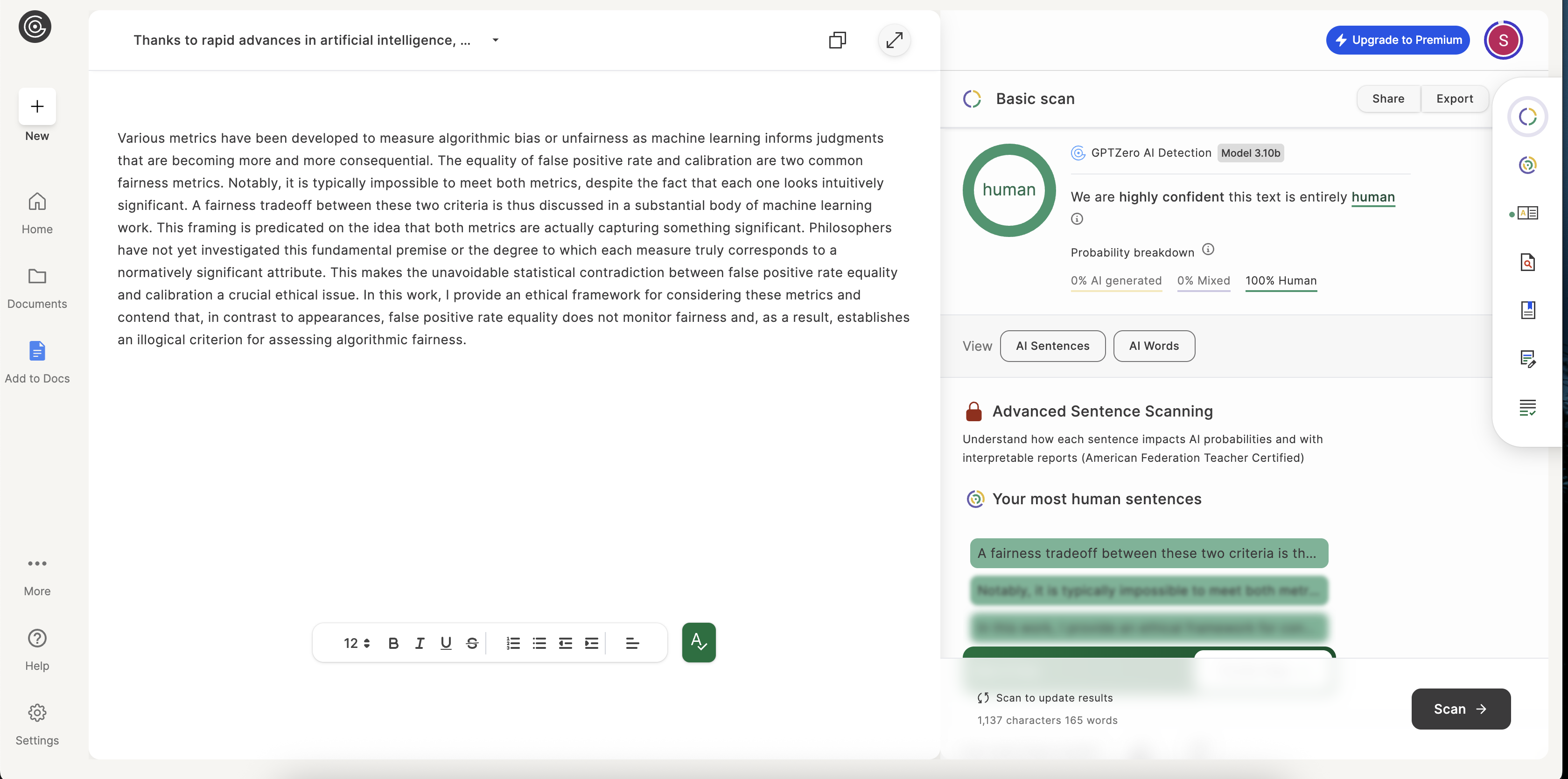
Various metrics have been developed to measure algorithmic bias or unfairness as machine learning informs judgments that are becoming more and more consequential. The equality of false positive rate and calibration are two common fairness metrics. Notably, it is typically impossible to meet both metrics, despite the fact that each one looks intuitively significant. A fairness tradeoff between these two criteria is thus discussed in a substantial body of machine learning work. This framing is predicated on the idea that both metrics are actually capturing something significant. Philosophers have not yet investigated this fundamental premise or the degree to which each measure truly corresponds to a normatively significant attribute. This makes the unavoidable statistical contradiction between false positive rate equality and calibration a crucial ethical issue. In this work, I provide an ethical framework for considering these metrics and contend that, in contrast to appearances, false positive rate equality does not monitor fairness and, as a result, establishes an illogical criterion for assessing algorithmic fairness.

3

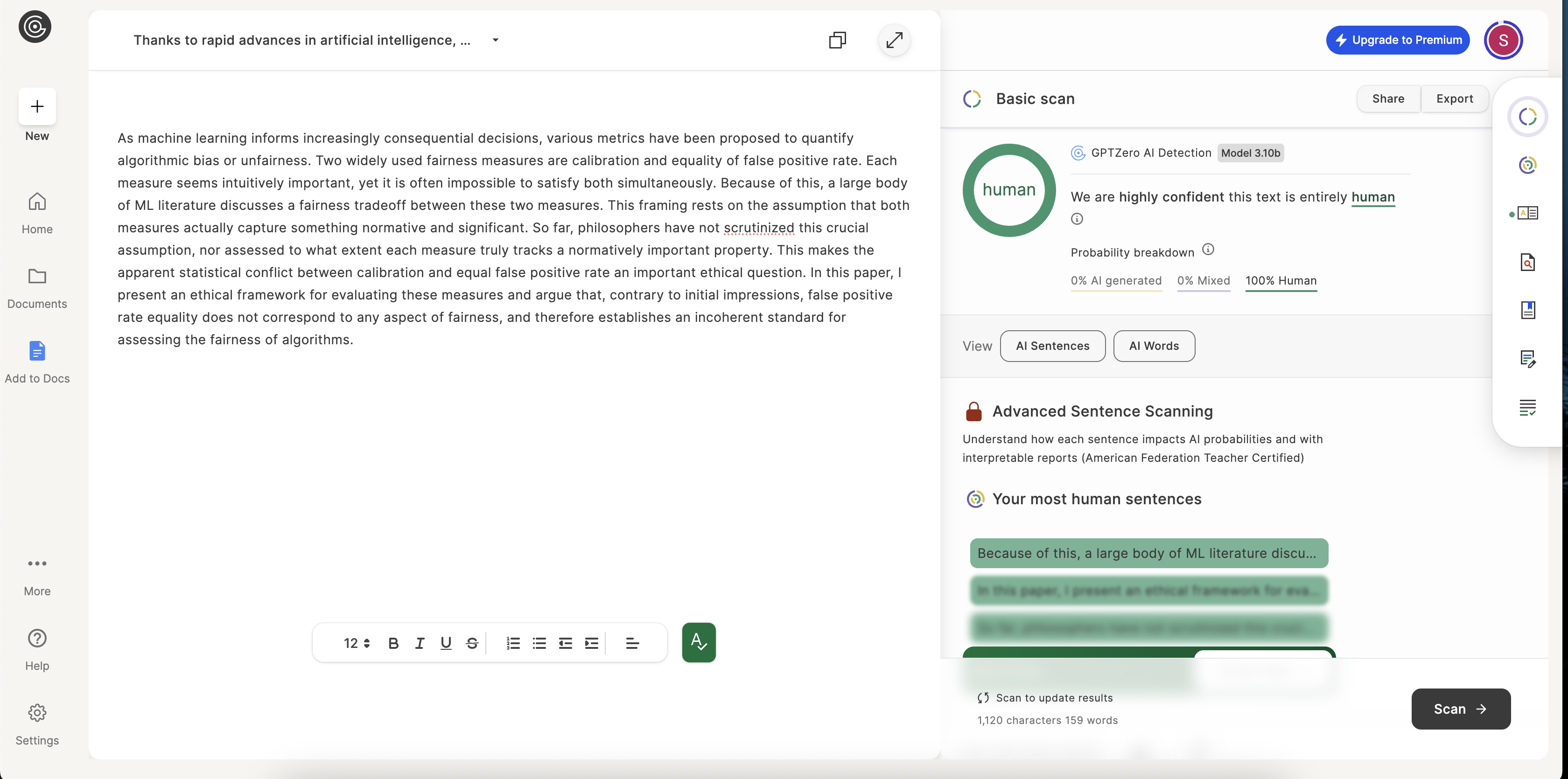
As machine learning informs increasingly consequential decisions, various metrics have been proposed to quantify algorithmic bias or unfairness. Two widely used fairness measures are calibration and equality of false positive rate. Each measure seems intuitively important, yet it is often impossible to satisfy both simultaneously. Because of this, a large body of ML literature discusses a fairness tradeoff between these two measures. This framing rests on the assumption that both measures actually capture something normative and significant. So far, philosophers have not scrutinized this crucial assumption, nor assessed to what extent each measure truly tracks a normatively important property. This makes the apparent statistical conflict between calibration and equal false positive rate an important ethical question. In this paper, I present an ethical framework for evaluating these measures and argue that, contrary to initial impressions, false positive rate equality does not correspond to any aspect of fairness, and therefore establishes an incoherent standard for assessing the fairness of algorithms.

Round 2 Analysis: The High-Stakes Challenge of Nuance

With more complex, layered concepts, the true colors of each AI tool begin to show. The task here isn't just to rephrase words but to maintain the delicate logical connections between ideas. VerbEdit's output was rated 100% human by both detectors, indicating its strength in preserving the academic tone and nuanced meaning. QuillBot also scored as human, but its rewrite was more aggressive. This round proves that for specialized or academic content, the best AI writing tool is one that respects the original's complexity, a critical factor for users in technical fields.

Round 3: The Ultimate Test with Advanced Academic Text

Original Text:

"Over the last decade, several formal, mathematical definitions of fairness have gained prominence. Here we first assemble and categorize these definitions into two broad families: (1) those that constrain the effects of decisions on disparities; and (2) those that constrain the effects of legally protected characteristics, like race and gender, on decisions. We then show, analytically and empirically, that both families of definitions typically result in strongly Pareto dominated decision policies. For example, in the case of college admissions, adhering to popular formal conceptions of fairness would simultaneously result in lower student-body diversity and a less academically prepared class, relative to what one could achieve by explicitly tailoring admissions policies to achieve desired outcomes. In this sense, requiring that these fairness definitions hold can, perversely, harm the very groups they were designed to protect. In contrast to axiomatic notions of fairness, we argue that the equitable design of algorithms requires grappling with their context-specific consequences, akin to the equitable design of policy."

Final Vote: Which Rewrite Masterfully Handles Academic Nuance?

AI-Rewritten Versions:

1

Over the past ten years, several formal, mathematical definitions of fairness have gained prominence. Here we first collect and categorize these definitions into two broad families: (1) those that limit how decisions influence disparities, and (2) those that limit how legally protected characteristics, such as race and gender, influence decisions. We then show, both analytically and empirically, that both families of definitions typically lead to strongly Pareto-dominated decision policies. For instance, in the case of college admissions, following popular formal notions of fairness would simultaneously yield a less diverse student body and a less academically prepared cohort than what could be achieved by explicitly designing admissions policies to reach specific outcomes. In this sense, insisting that these fairness definitions hold can, in effect, harm the very groups they are intended to protect. Unlike axiomatic conceptions of fairness, we contend that the equitable design of algorithms requires weighing their context-specific consequences, much like the equitable design of public policy.

2

A number of formal, mathematical conceptions of fairness have gained popularity in the past ten years. Here, we first compile and group these definitions into two major families: (1) those that limit how decisions affect disparities, and (2) those that limit how constitutionally protected traits, such as gender and race, influence decisions. We then demonstrate analytically and empirically that both definition families generally provide decision policies that are heavily influenced by Pareto. In contrast to what could be accomplished by specifically modifying admissions policies to achieve desired results, for instance, following popular formal conceptions of fairness in the context of college admissions would also result in a less diverse student body and a less academically prepared class. In this way, insisting that these conceptions of fairness are true can, ironically, hurt the same populations they were intended to defend. Contrary to axiomatic ideas of fairness, we contend that, like the equitable design of policy, the equitable design of algorithms necessitates considering their context-specific implications.

3

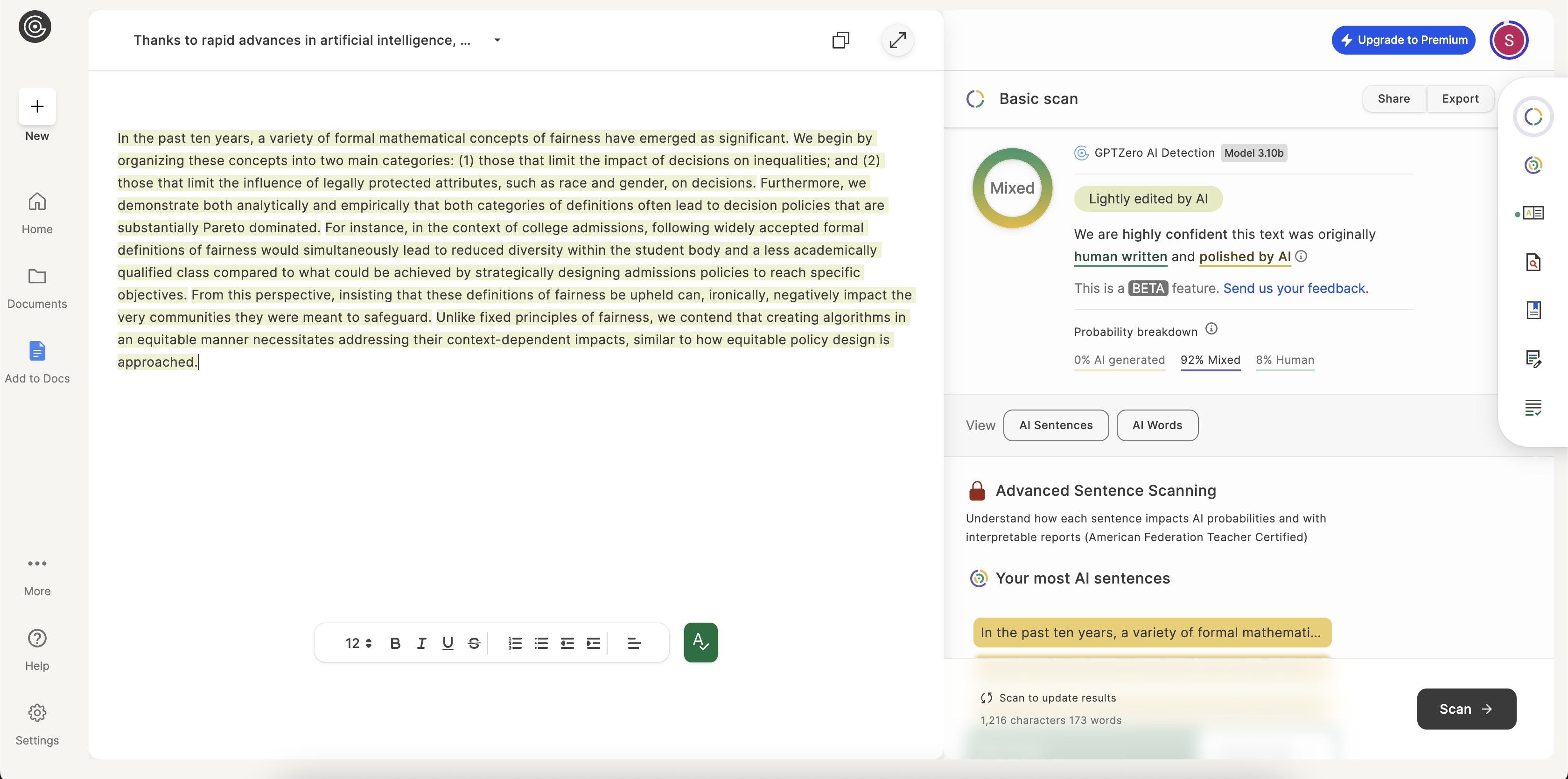
In the past ten years, a variety of formal mathematical concepts of fairness have emerged as significant. We begin by organizing these concepts into two main categories: (1) those that limit the impact of decisions on inequalities; and (2) those that limit the influence of legally protected attributes, such as race and gender, on decisions. Furthermore, we demonstrate both analytically and empirically that both categories of definitions often lead to decision policies that are substantially Pareto dominated. For instance, in the context of college admissions, following widely accepted formal definitions of fairness would simultaneously lead to reduced diversity within the student body and a less academically qualified class compared to what could be achieved by strategically designing admissions policies to reach specific objectives. From this perspective, insisting that these definitions of fairness be upheld can, ironically, negatively impact the very communities they were meant to safeguard. Unlike fixed principles of fairness, we contend that creating algorithms in an equitable manner necessitates addressing their context-dependent impacts, similar to how equitable policy design is approached.

Frequently Asked Questions (FAQ)

What is the best AI rewriter to avoid detection?

Based on our tests, tools that prioritize nuanced changes over aggressive restructuring, like VerbEdit, tend to produce text with lower AI detection scores. They often maintain a more natural, human-like cadence, which is harder for detectors to flag. However, QuillBot can also be effective by changing the structure so much that it appears completely new.

Can AI detectors be 100% accurate?

No, AI detectors are not infallible. They work by recognizing patterns, sentence structures, and word choices common in AI-generated text. As AI models become more sophisticated, they learn to mimic human writing more effectively, making it a constant cat-and-mouse game. A "100% Human" score means the detector found no AI patterns, but it's not a guarantee.

Is QuillBot or Grammarly better for paraphrasing?

It depends on your goal. QuillBot is designed for paraphrasing and offers more aggressive options to completely change sentence structures. Grammarly's primary function is grammar correction, but its rewriting feature focuses on improving clarity and conciseness. For a simple rephrase for clarity, Grammarly is good. For creating a distinctly different version of a text, QuillBot is generally more powerful.

How do I make my AI text sound more human?

To humanize AI text, start by using an AI paraphrasing tool to get a base rewrite. Then, manually edit it: vary your sentence lengths, add personal anecdotes or turns of phrase, check for repetitive words, and read it aloud to catch unnatural phrasing. The goal is to break the predictable patterns that AI detectors look for.

Final Verdict: Choosing Your AI Writing Partner

After three rounds of increasing difficulty, the data paints a clear picture. While all three AI paraphrasing tools are incredibly capable, they have distinct strengths tailored to different user needs. The "best" tool isn't universal; it's the one that aligns with your specific goal, whether that's basic clarity, a total rewrite, or crafting nuanced, undetectable content.

Tool Primary Strength Best For
Grammarly Clarity & Grammatical Precision Users needing clean, professional, and easy-to-read text. Best for fixing and slightly rephrasing existing work.
QuillBot Aggressive Restructuring Content creators who need to significantly alter sentence structure to avoid plagiarism and create a unique version of source text.
VerbEdit Nuance & AI Humanization Writers, students, and professionals aiming to maintain the original meaning while making text sound natural to bypass AI detection.

The objective scores from the AI detectors are the most telling takeaway. Tools that make more subtle, intelligent changes often preserve a human-like quality, leading to lower AI detection probabilities. When choosing your AI writing assistant, decide if your priority is a sledgehammer-style rewrite or a surgical refinement that elevates authenticity. We hope this direct comparison helps you select the perfect tool to conquer your content creation challenges.

Data & Source Screenshots

Transparency is everything in a head-to-head test. Below are the unedited screenshots from the AI detection tools used in our analysis for every single output. You can verify the scores and see exactly how each platform evaluated the AI-generated texts.

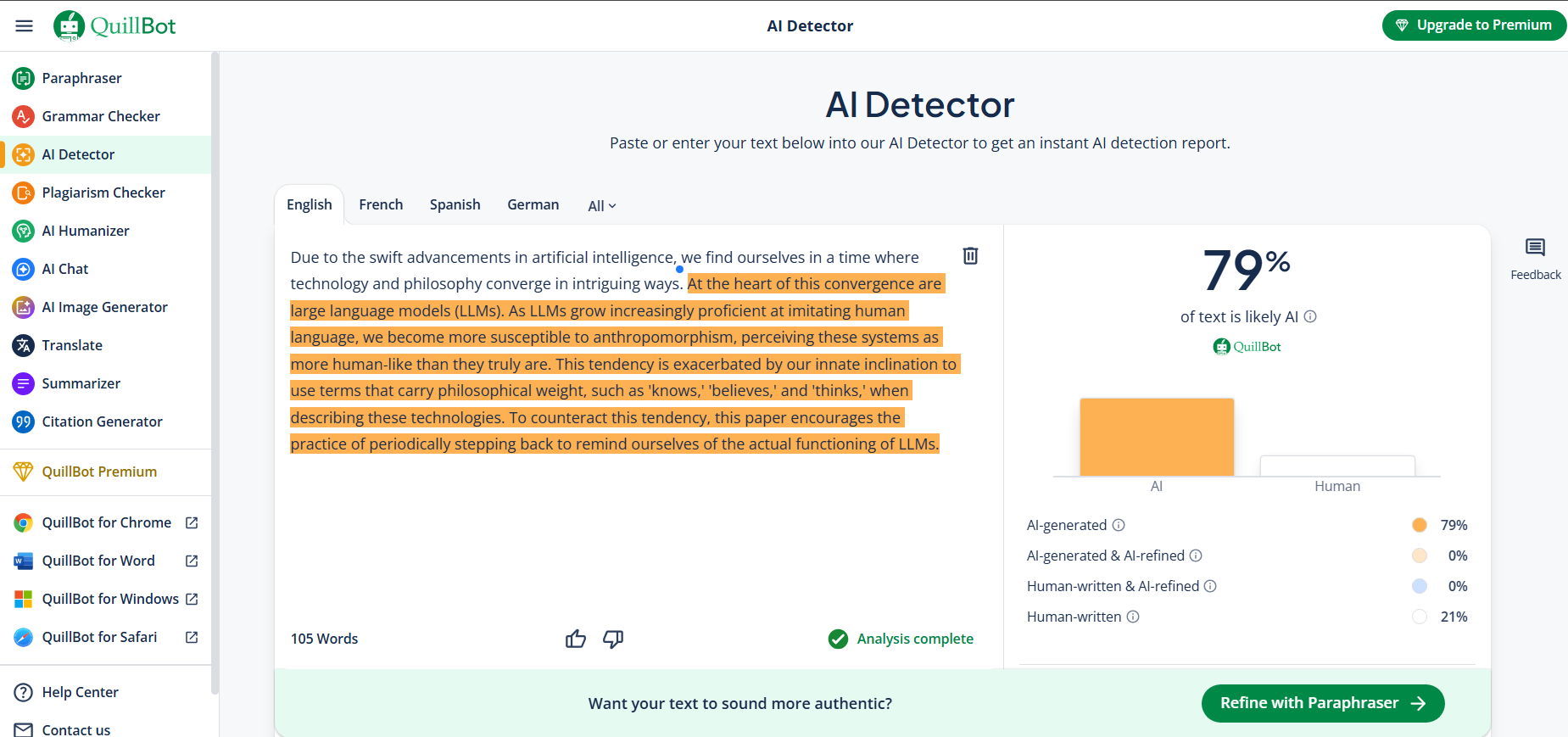
QuillBot's AI detector result for Grammarly's Tier 1 output, showing a 79% AI score.
Fig 1: QB AI detection score for Grammarly's Tier 1 output.
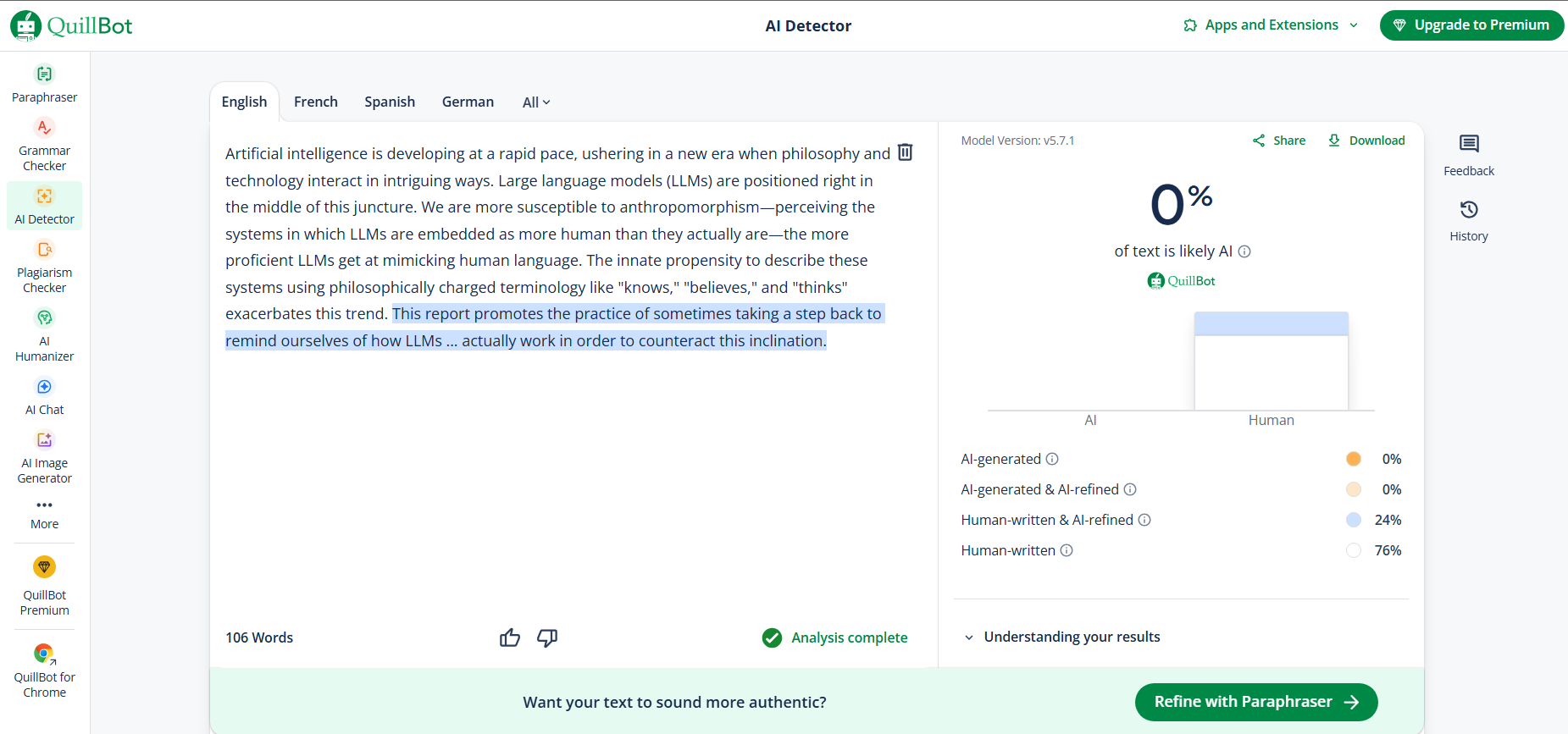
QuillBot's AI detector result for QuillBot's own Tier 1 output, scoring 100% human.
Fig 2: QB AI detection score for QuillBot's Tier 1 output.
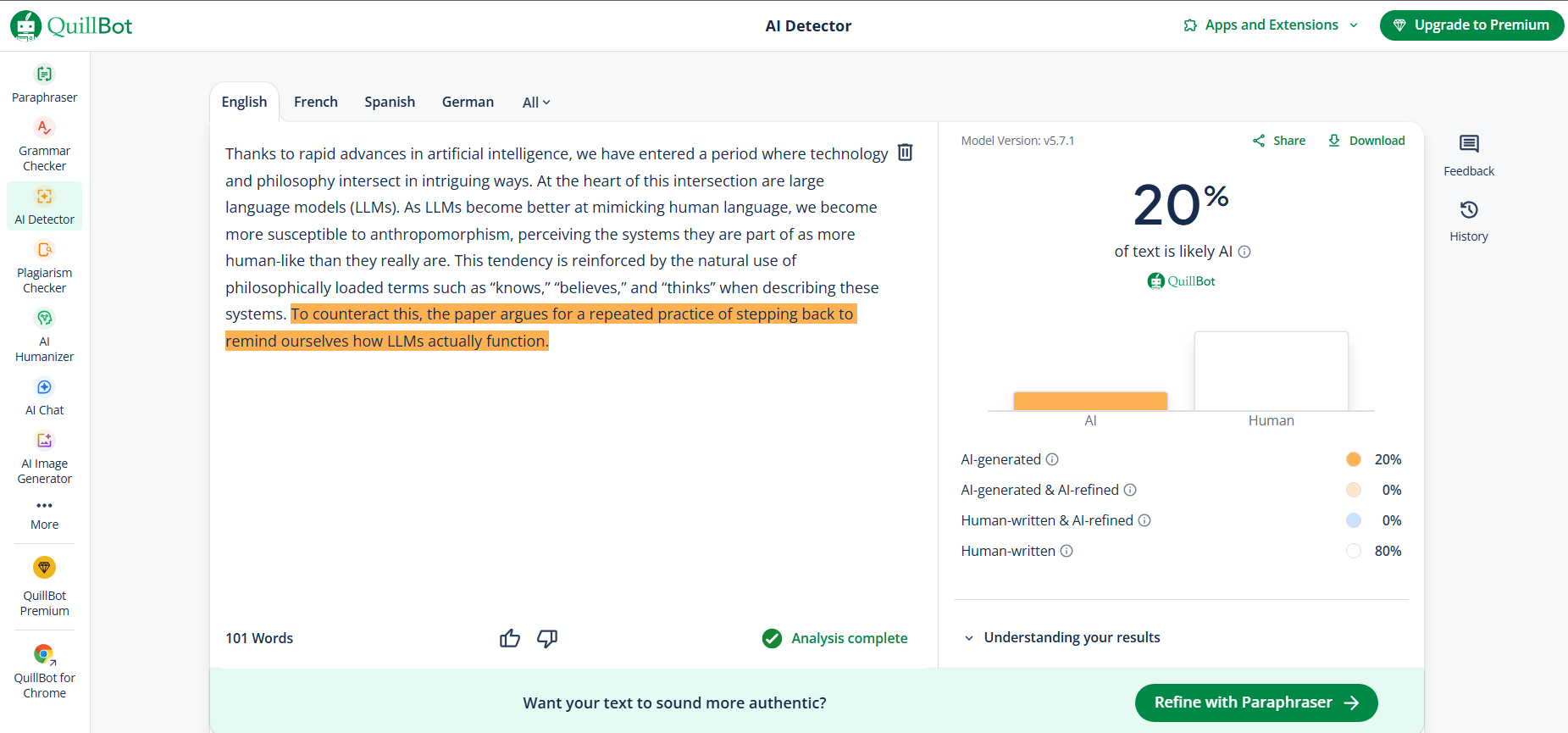
QuillBot's AI detector result for VerbEdit's Tier 1 output, showing a 20% AI score (80% human).
Fig 3: QB AI detection score for VerbEdit's Tier 1 output.
GPTZero AI detection score for Grammarly's Tier 2 output, showing 91% AI polished.
Fig 4: GPTZero AI detection score for Grammarly's Tier 2 output.
GPTZero AI detection score for QuillBot's Tier 2 output, showing 100% human.
Fig 5: GPTZero AI detection score for QuillBot's Tier 2 output.
GPTZero AI detection score for VerbEdit's Tier 2 output, showing 100% human.
Fig 6: GPTZero AI detection score for VerbEdit's Tier 2 output.
GPTZero AI detection score for Grammarly's Tier 3 output, showing 92% AI refined.
Fig 7: GPTZero AI detection score for Grammarly's Tier 3 output.
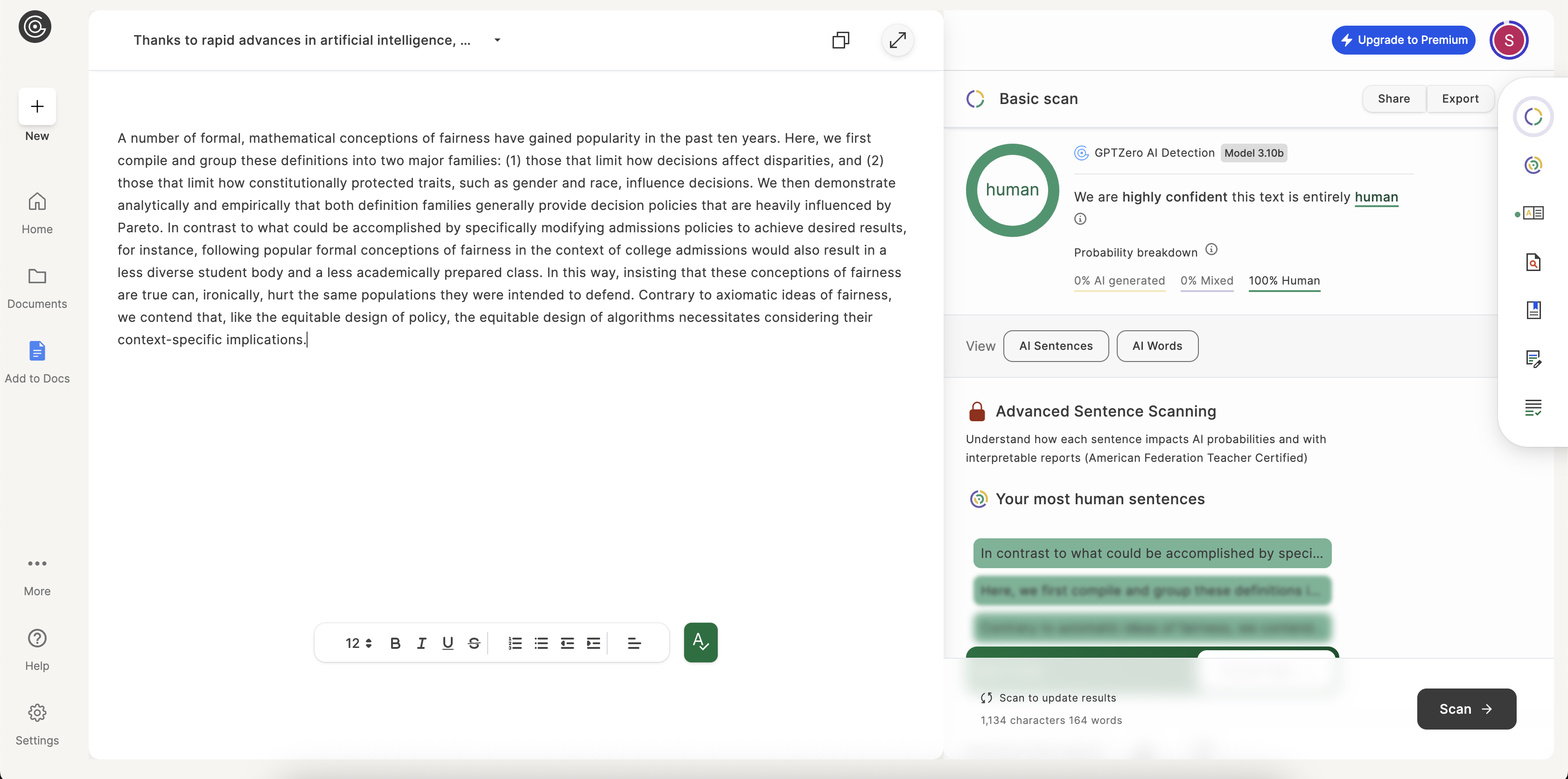
GPTZero AI detection score for QuillBot's Tier 3 output, showing 100% human.
Fig 8: GPTZero AI detection score for QuillBot's Tier 3 output.
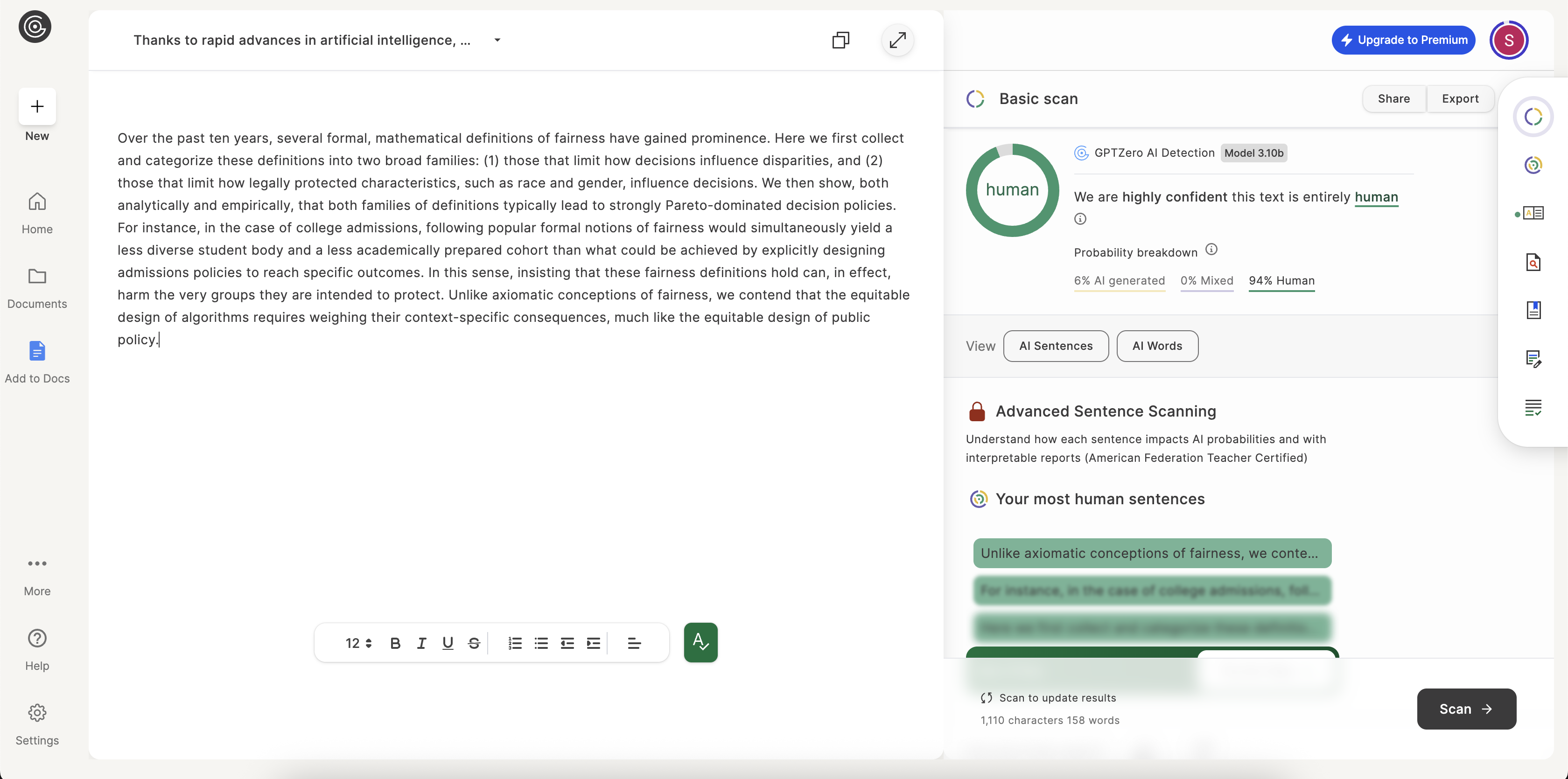
GPTZero AI detection score for VerbEdit's Tier 3 output, showing only 6% AI-generated.
Fig 9: GPTZero AI detection score for VerbEdit's Tier 3 output.
The full text of Grammarly's Tier 2 output on algorithmic bias.
Fig 10: Grammarly Tier 2 Output.
The full text of QuillBot's Tier 2 output on algorithmic bias.
Fig 11: AI QuillBot Tier 2 Output.
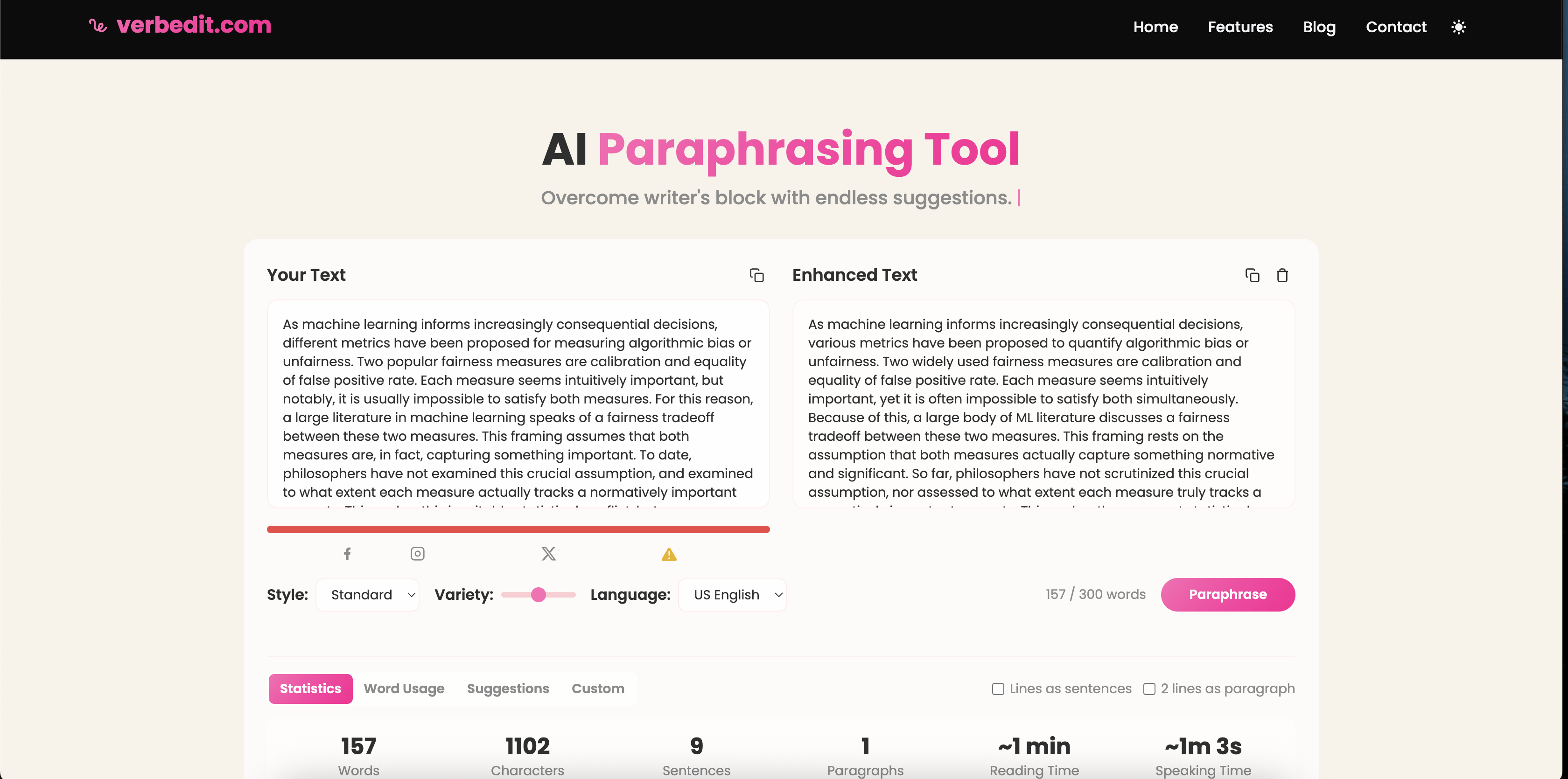
The full text of VerbEdit's Tier 2 output on algorithmic bias.
Fig 12: VerbEdit Tier 2 Output.